
How I Work
From first message to handover. What to expect, and why I do it this way.
First conversation
You tell me what you're trying to do. Photos, rough sizes, tile type, what's currently there. I'll ask a few questions to understand the job properly — not just the tiling, but what's underneath it.
Site visit
I come and look at it. Most jobs have something you can't see from a photo — floor movement, a dodgy substrate, a level issue. Better to find it now than halfway through the job.
Clear quote
You get a written, itemised quote in plain English. Labour, materials, prep — all in. No guessing. If something changes once we start, I'll tell you before any extra work is done.
Preparation
This is where most of the time goes on a proper job. Levelling, waterproofing, boarding, strengthening — whatever the surface needs. Skip this and the tiling won't last. Simple as that.
Layout & setting out
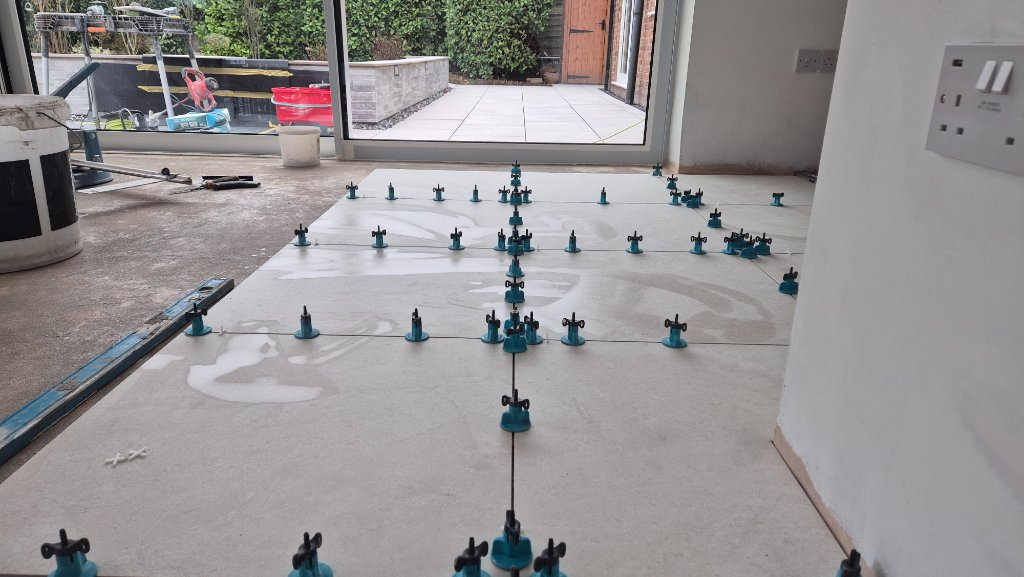
Tiles are set out before a single one is fixed. Where cuts fall, how the pattern runs, what you'll see from the doorway — it all gets thought through first. Levelling clips throughout to keep it flat.
Grouting
Once the adhesive has fully cured. Epoxy where it makes sense — more durable, won't stain, won't crack. Lines clean and consistent throughout.
Finished and handed over
Silicone in the right places. Everything cleaned up and protective coverings taken off. Ready to use. I'll point out anything worth knowing before I leave.
What you're getting
Sole trader — you deal with me, start to finish
23+ years in one trade, not spread across several
Member of The Tile Association
Full public liability insurance
Good materials — adhesives, tanking, grout systems that actually work
Site protected properly before work starts
You know what's happening and why
Workmanship guarantee (conditions apply, common sense applies)
Preparation first
Most tile failures start underneath — not in the tile, not in the grout. That's where I spend the time. Substrates checked, surfaces levelled, movement controlled, wet areas tanked properly.
It takes longer. It costs a bit more upfront. But it's the difference between a floor that lasts twenty years and one that starts moving in three.
No shortcuts
Every job gets proper prep, a proper layout, levelling clips, the right grout for the situation, and a clean finish. Not because it's impressive — because it's just how it should be done.
I'd rather do fewer jobs properly than rush through more. That's not a sales line — it's just how I work.
Standards & TTA membership
The Tile Association
I'm a vetted member of the TTA — the UK trade body for professional tilers. It's not automatic and it's not handed out lightly.
The badge isn't the point. The standard it reflects is.
What it means in practice
- Best-practice installation
- Correct preparation
- Suitable materials for the substrate
- Proper assessment before work begins
- Professional accountability throughout
One person, accountable for the finish
Some firms send a salesman first, then a crew you've never met. With me, the person you speak to on the phone is the person on their knees doing the work.
TTA membership reinforces what I do anyway — proper prep, correct installation, accountable for the result.
Guarantee
I stand behind the work. Every job. That means:
- • Properly installed to industry standards (BS 5385)
- • Flat and level with no lippage
- • Built on a suitable, properly prepared substrate
- • Finished cleanly and professionally
Note: The guarantee covers my workmanship and applies to surfaces that were suitable and prepared correctly before installation. Structural movement, deflection in timber floors, or pre-existing building defects are not covered. I'll raise any concerns about substrate suitability before proceeding.
Every job is carried out properly from the start and backed by a clear workmanship guarantee.
Get in touch
Tell me what you've got. I'll tell you what it needs — and whether I'm the right person for it.